
%20copy.jpeg)
Elections are a remarkable thing. They roll around fairly regularly in New Zealand—more frequently than in many other countries—and perhaps that familiarity breeds, if not contempt, something like short-sightedness. It’s actually remarkable that we trust this system to allocate power fairly, that its outcomes are respected and accepted even when the stakes are high, and that all of this takes place peacefully.
But polarisation is an obvious and growing threat to this settlement. We interviewed Oxford's Professor Richard Ekins KC (Hon) about the problem of polarisation and his view that the rule of law is being “weaponised” in ways that fuel political polarisation.
When we hear about polarisation, we might think of declining trust in institutions like government. We might also think about social cohesion, or lack thereof—according to the 2026 Acumen Edelman Trust Barometer, almost a third of Kiwis would “rather switch departments than report to a manager with different values than me” and nearly 20 percent would put less effort into helping their team leader succeed if they had different political beliefs. The 2025 edition of the same report found a quarter of Kiwis approving of hostile activism to drive change, meaning things like intentional disinformation, damaging property, and threatening or even committing violence.
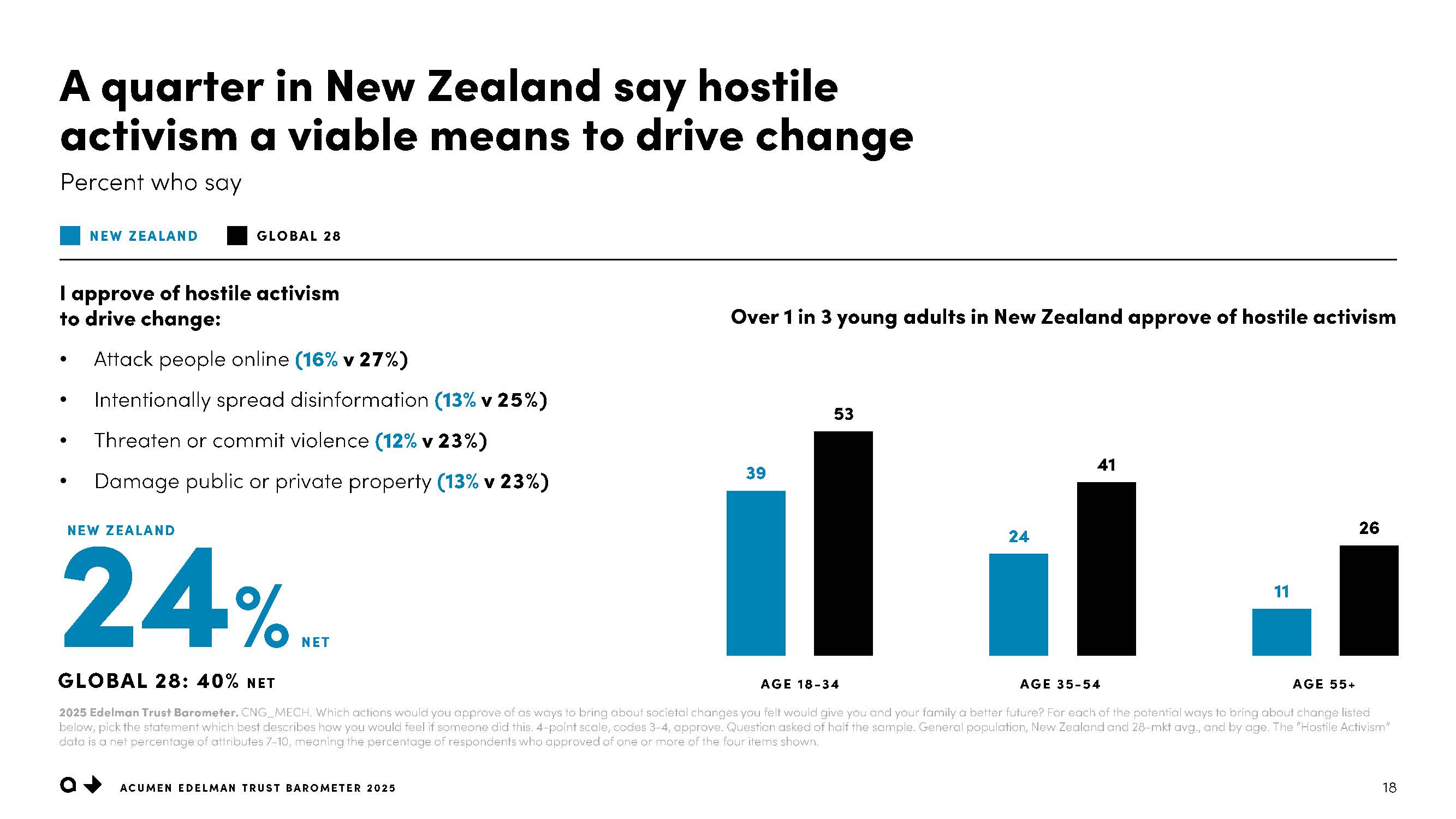
This looks a lot like a breakdown in the kind of “civic friendship” that Professor Ekins says is essential for a healthy society. We will obviously disagree about a range of important issues, and we can only hold together as a nation if these “intense disagreements [are] nested within a baseline of political unity”.
This requires trust, including trust that when power is transferred no-one will be treated arbitrarily or as political enemies—in fact, that everyone will be treated transparently and fairly according to laws that apply to everyone and that are open and accessible. But some recent trends have undermined the stability of this settlement.
We discuss these trends in this interview, including the rise of celebrity judges from Spider Woman to the Notorious RBG who are expected to effect “heroic judicial intervention” in highly controversial and political situations like the UK Supreme Court’s Brexit decisions, whether this turns the rule of law into the rule of lawyers, and what’s at stake when we replace parliamentary sovereignty and the mutual deliberation and compromise of ordinary politics with the rule of law as a “master legal principle”.
The interview draws on Professor Ekins’ article, "Political Polarization and the Rule of Law" (2025) Law and Ethics of Human Rights 19 (2):201-224.


